Islamic Designs for Artists and Craftspeople (Dover Pictorial Archive)
| Author | : | |
| Rating | : | 4.72 (921 Votes) |
| Asin | : | 048625819X |
| Format Type | : | paperback |
| Number of Pages | : | 128 Pages |
| Publish Date | : | 2013-11-30 |
| Language | : | English |

DESCRIPTION:
Not much too it. It wasn't too useful to me, but you may have a use for it. No color.. "Four Stars" according to Jeanine Kindsfather. Fascinating designs.. Using this for geometric artistic pattern ideas This is a great addition to my art-reference library. I just sometimes visually soak in reference before beginning a personally developed art project. Gets the juices flowing in a given direction.
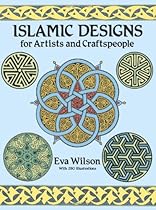
From the Back CoverBased on actual designs dating back as far as the ninth century, the 280 royalty-free designs in this volume constitute a rich and varied archive of authentic Islamic motifs. Embodying Chinese floral patterns, nonfigurative and stylized motifs from Central Asia, and a wealth of decorative calligraphic and geometric designs developed by Muslim artists, these illustrations include a wide variety of geometrics, florals, foliates, and animal and human figures. Additional notes provide useful information on materials and creative techniques.Crafters and art students will find this collection a stimulating source of inspiration. Dozens of plates show various stages in design construction, revealing how intricate and complicated-looking patterns are built on simple geometric principles and traditional patterns.Originally published under the auspices of the British Museum, Islamic Designs for Artists and Craftspeople cont
Based on actual designs dating back as far as the ninth century, the 280 royalty-free designs in this volume constitute a rich and varied archive of authentic Islamic motifs. Additional notes provide useful information on materials and creative techniques.Crafters and art students will find this collection a stimulating source of inspiration. (Although excluded from public, political, and religious buildings because of religious restrictions, depiction of the human figure was tolerated in private dwellings such as harems and baths.)Carefully researched and beautifully rendered from book illustrations, pottery, metalwork, carvings, and other sources, the patterns come in a splendid variety of imaginative